Your Cart
Loading

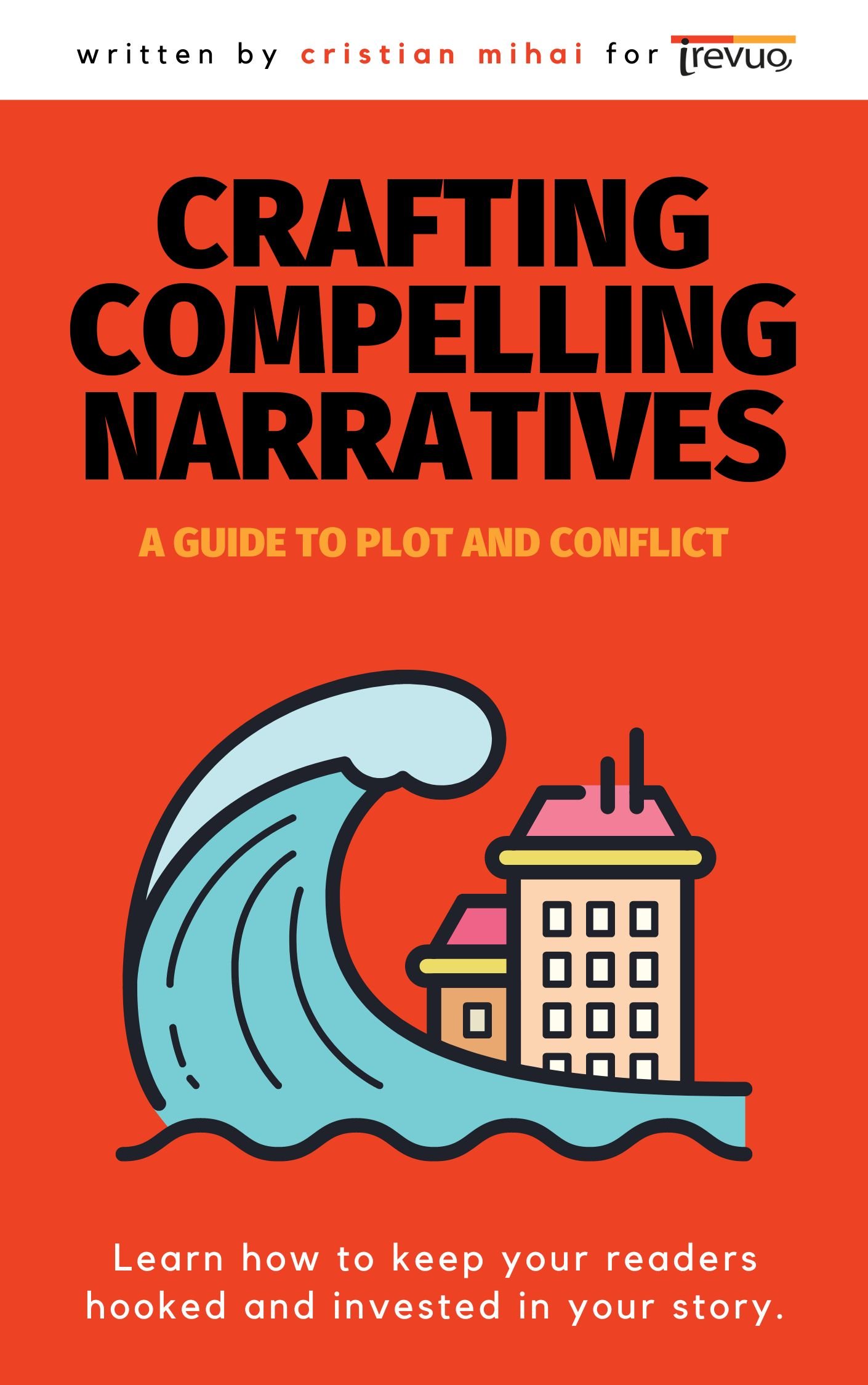
Crafting Compelling Narratives: A Guide to Plot and Conflict

On Sale
$5.00
$5.00
Added to cart

For writers frustrated with generic advice and prescriptive templates, Crafting Compelling Narratives offers something rare: genuine insight. Drawing on historical examples from Freytag to Forster, and contemporary analysis of everything from Jaws to The Road, this guide reframes plot as consequence, conflict as incompatible desire, and structure as emergent phenomenon. The result is a book that respects your intelligence, trusts your talent, and gives you tools you can use the moment you finish reading.

You will get the following files:
  • EPUB (3MB)
  • MOBI (11MB)
  • PDF (6MB)

Your Stories Feel Mechanical Because You're Building Them Backwards

In 1863, Gustav Freytag published Die Technik des Dramas. He had spent years watching plays, hundreds of them, taking notes in the dark while audiences laughed and wept and sat forward in their seats. He wasn't inventing dramatic structure. He was documenting what he observed when stories worked.

His triangle became a pyramid. His observation became a prescription. And somewhere in the century and a half since, writers forgot the difference between describing fire and knowing how to start one.


You've read the beat sheets. You've memorized Save the Cat. You know exactly when your midpoint reversal should land and where your "all is lost" moment belongs. You've done everything the templates told you to do.


Your stories still feel dead.


The structure is there. The beats hit their marks. But something essential is missing, some quality that makes readers forget they're reading, that makes them lean forward, that makes them cancel their plans because they have to know what happens next.


The problem isn't your talent.


The problem is the model.


This book fixes the model.

What Nobody Tells You About Writing Advice

Every bestselling craft book, every screenwriting seminar, every "story structure" breakdown approaches narrative the same way: here are the pieces, here's where they go, now assemble. Act One ends at 25%. The midpoint lands at 50%. The dark night of the soul arrives at 75%. Hit your marks. Fill in the blanks. Wonder why the result feels like furniture assembled from instructions rather than something that grew.


This approach works beautifully for analysis. You can take any successful story and map its beats onto a template. The template will fit. It will always fit. The same way a coroner's report fits every body on the table.


The template describes what happened. It doesn't tell you how to make it happen again.


Here's what the beat sheets leave out:

  • Plot doesn't come from structure. Plot comes from characters pursuing goals against resistance. Structure emerges from that pursuit the way smoke emerges from fire. You don't create smoke by sculpting it. You create it by understanding combustion.
  • Conflict isn't volume. Two characters screaming at each other isn't conflict. Conflict is the collision between incompatible desires. A scene can contain no raised voices and unbearable tension. A scene can contain explosions and feel completely flat. The mechanism matters. The surface phenomena don't.
  • Theme isn't message. You don't illustrate your theme through conflict. Your conflict is your theme, dramatized through action. When you understand this, theme stops being something you impose and becomes something that emerges, inevitable and resonant.


The prescriptive model gets all of this backwards. It tells you to place your inciting incident at minute twelve because successful movies have inciting incidents at minute twelve. It never explains why something tends to happen at that point, what psychological mechanism creates the pattern, or how to generate that mechanism yourself.


You're copying the symptom. You need to understand the disease.

A First-Principles Approach to Story

Crafting Compelling Narratives rebuilds your understanding of plot and conflict from the foundation up.


E.M. Forster drew the distinction in 1927: "The king died and then the queen died" is a story. "The king died and then the queen died of grief" is a plot. One word transforms a sequence of events into a chain of consequence. That word is everything.

This book teaches you to think in consequence.


Every chapter begins with a specific case, a verifiable historical example that contains the argument in miniature. Vladimir Propp analyzing Russian folktales. The writers' room at Breaking Bad mapping Walter White's moral descent. Fitzgerald cutting 40,000 words from The Great Gatsby to find the wound at its center. The examples do the work. The principles emerge from them, grounded in how stories actually function rather than how templates say they should.


You'll learn to see plot as an engine of consequence, where every scene creates the conditions for the next. You'll understand conflict as the collision between incompatible desires, and you'll learn to identify the specific types of opposition you instinctively create. You'll discover your conflict signature, the unconscious patterns that shape every story you tell, and you'll learn to deploy those patterns deliberately.


The goal is simple: to make you see stories the way they actually work, so you can build them from the inside out.

Inside the Book

  • The Consequence Engine Why "and then" kills narrative momentum while "therefore" and "but" create it. A scene-by-scene analysis of how Breaking Bad maintained escalating tension across 62 episodes without ever letting the engine stall. The specific techniques you can steal.
  • Promise Architecture What Chekhov actually understood about the gun on the wall. Every element in your story makes a promise to the reader. Foreshadowing is promise-making. Payoff is promise-keeping. Plot holes are broken promises that fracture trust. A framework for auditing the promises in your manuscript.
  • The Want/Fear Collision Character psychology generates plot naturally when you understand the mechanism. Want creates forward motion. Fear creates resistance. The friction between them produces story. Illustrated through The Great Gatsby, Gone Girl, and The Godfather, with a diagnostic tool for mapping your own characters.
  • Conflict as Incompatible Desire Volume is surface. Fighting is surface. The underlying mechanism is want versus want, and that mechanism operates whether your characters are screaming or sitting in silence. A taxonomy of conflict types with examples from literary and commercial fiction.
  • The Conflict Signature Every writer has unconscious patterns, specific types of opposition they instinctively create. Understanding your signature allows you to deploy it deliberately, to lean into your strengths and shore up your blind spots. Includes a diagnostic exercise that reveals your patterns.
  • Escalation Dynamics Why some conflicts build unbearable tension while others plateau and die. The physics of narrative pressure, with case studies from Jaws, The Road, and No Country for Old Men. Techniques for multi-dimensional escalation that prevents your reader from ever feeling safe.
  • The Descriptive Revolution How Freytag's observation became prescription, and why that transformation broke something essential. A history of structural analysis from Aristotle through the Hero's Journey, with attention to what each framework captures and what it misses.
  • Organic Architecture What emerges when you stop imposing structure and start generating it. The relationship between character psychology, goal pursuit, and the patterns we call "acts." Why structure appears at certain ratios, and why those ratios are consequences rather than causes.
  • Theme as Argument Your conflict doesn't illustrate your theme. Your conflict is your theme, dramatized through action. When you understand this relationship, theme stops feeling like an imposition and starts feeling like a discovery. Examples from literary fiction that reveal how theme and conflict function as a single mechanism.
  • Scene Construction The micro-level application of consequence and conflict. How to build scenes that pull readers forward. The techniques that make "just one more chapter" inevitable.
  • Revision as Diagnosis How to identify broken promises, stalled consequence chains, and flattened conflict in your existing work. A systematic approach to revision that fixes structural problems at their source.
  • The Conflict Signature Workshop An extended diagnostic exercise that maps your unconscious patterns across multiple dimensions. What types of opposition you gravitate toward. What types you avoid. What this reveals about your strengths and your blind spots as a writer.

This Book Is For Writers Who Are Done With Templates

  • You've read the other books.

    You own Save the Cat. You've studied the Hero's Journey. You've downloaded beat sheet after beat sheet, and you've tried to make your stories fit. Something keeps going wrong. The pieces are all there, but the machine won't run.

  • You're smart enough to handle complexity.

    You don't need advice dumbed down. You don't need to be protected from uncomfortable truths about craft. You want to understand why stories work, even if that understanding takes effort.

  • You're frustrated with generic advice.

    "Raise the stakes." "Create compelling characters." "Show, don't tell." You know all of this already. You need techniques, not slogans. You need frameworks you can apply to specific problems in your specific manuscript.

  • You're ready to think differently.

    The prescriptive model has failed you. You're willing to rebuild your understanding from first principles, even if that means unlearning things you thought you knew.

  • You want to write stories that breathe.

    Stories that feel alive. Stories where structure emerges from character and consequence rather than being imposed from a template. Stories that make readers forget they're reading.

This Isn't Another Beat Sheet

Most writing books tell you what to do. This book shows you why it works.


First principles over formulas. Every concept in this book traces back to fundamental mechanisms of narrative. When you understand the mechanism, you can apply it to any story, any genre, any length. You stop following rules and start generating them.


Verification over assertion. Every historical claim has been fact-checked. Every example is verifiable. When something is uncertain, the text says so plainly and moves on. You're reading documented truth, not received wisdom passed down through writing workshops.


Diagnosis over prescription. The exercises in this book don't just give you tasks to complete. They reveal patterns you didn't know you had. They show you who you are as a writer, so you can work with your instincts instead of against them.


Immediate applicability. Every principle connects to specific technique. Every technique can be applied to your work in progress today. You won't finish this book and wonder how to use it. You'll finish this book and know exactly what to do next.


Respect for your intelligence. No hedging. No qualifications. No "one might argue." The text states positions directly and trusts you to engage with them. You're a writer. You can handle disagreement. You can handle complexity. You can handle truth.

What This Book Will Do For You

You will finish Crafting Compelling Narratives with a different relationship to story.


You'll see plot as a chain of consequence, each scene creating the conditions for the next. You'll understand conflict as the collision between incompatible desires, and you'll know how to generate that collision deliberately. You'll recognize your conflict signature, the unconscious patterns that shape everything you write, and you'll know how to use them.


Structure will stop feeling like a cage. It will start feeling like gravity, a natural force that emerges when characters pursue goals against resistance. You'll stop asking "what should happen next" and start asking "what must happen next." The answers will feel inevitable.


Your stories will breathe.


The template is dead. Long live the engine.

Customer Reviews

There are no reviews yet.